


In the heart of Florida, where the sun commands the rhythm of daily life, the backyard pool is more than a luxury; it is a vital escape. When homeowners embark on the journey of pool ownership or consider a renovation, they are often met with a fundamental question: Should the water be sanitized with traditional chlorine or a modern saltwater system? This choice is about more than just the initial feeling of the water on your skin; it is a decision that dictates the mechanical life of your pool equipment, the long-term cost of your investment, and the specific level of expert care required to keep the oasis pristine.
Both systems have their passionate advocates and their distinct challenges. While many believe the choice is between “chemicals” and “no chemicals,” the truth is much more nuanced. Both pools rely on chlorine to stay safe and clear; the real difference lies in the delivery method and the maintenance rituals that follow. Understanding these differences is the key to ensuring that your pool remains a source of joy rather than a source of labor.
The Saltwater Misconception: How Electrolysis Really Works
The most common myth surrounding saltwater pools is that they are a chlorine-free alternative. In reality, a saltwater pool is simply a pool that manufactures its own chlorine on-site. The process begins with a piece of equipment known as a salt chlorine generator, or a salt cell. This device uses a process called electrolysis to convert dissolved pool-grade salt into hypochlorous acid, the same sanitizing agent found in traditional chlorine.
The beauty of this system is its consistency. Unlike a traditional pool where chlorine levels can spike and dip depending on when a gallon of liquid is poured in, a saltwater system provides a steady, slow introduction of sanitizer.
This results in water that feels significantly softer and “silkier” to the touch. Because the salt concentration is quite low, roughly one-tenth the salinity of the ocean, it is incredibly gentle on the eyes and skin, making it a favorite for families with young children or swimmers with sensitive skin.
However, this “automated” nature often leads homeowners into a false sense of security. Because the system is generating its own sanitizer, there is a temptation to believe the pool no longer requires attention. This is where the need for expert oversight begins.
The Hidden Complexity of Saltwater Maintenance
While saltwater pools may require less day-to-day chemical handling, they demand a more sophisticated understanding of equipment health. The salt cell itself is a hardworking component that requires regular professional care to function efficiently. Over time, the electrolysis process causes calcium scale to build up on the metallic plates inside the cell. If this scale is not removed through periodic acid washing, typically every three to four months, the cell will lose its ability to generate chlorine, leading to a sudden and unexpected algae bloom.
Furthermore, saltwater systems have a natural tendency to drive the water’s pH levels upward. High pH is the enemy of pool health; it renders chlorine less effective, causes cloudy water, and can lead to irritating deposits on pool tiles and plumbing. An expert technician monitors these subtle shifts, balancing the pH and alkalinity to ensure the salt cell isn’t working harder than it needs to.
Perhaps the most significant “hidden” factor in saltwater care is corrosion. Salt is naturally aggressive toward certain materials. Without proper sealing and maintenance, saltwater can corrode metal ladders, light housings, and even high-end natural stone coping. Expert maintenance involves not just testing the water, but also inspecting these physical components to ensure that the “silky” water isn’t slowly eating away at the pool’s structural beauty.
The Tried-and-True Path: Traditional Chlorine Care
For decades, the standard for pool sanitation has been the manual addition of chlorine in liquid, tablet, or granular form. This method remains popular for a reason: it is straightforward, highly effective at tackling heavy bather loads, and has a much lower barrier to entry in terms of equipment costs.
In a traditional chlorine pool, the homeowner or service provider has direct control over the sanitization levels. If a large group of people uses the pool or a heavy tropical rainstorm washes organic debris into the water, a technician can immediately “shock” the pool to neutralize contaminants. This strong oxidizing power is one of the greatest strengths of a chlorine system; it can clear an algae bloom much faster than a salt generator can.
However, the “peaks and valleys” of manual dosing are a significant drawback. Chlorine levels can fluctuate wildly, especially under the intense Florida sun, which can deplete chlorine levels in a matter of hours. Without a steady hand, the water can become harsh and irritating, leading to the classic “red eye” and dry skin symptoms associated with neglected pools.
The Maintenance Burden of Chlorine
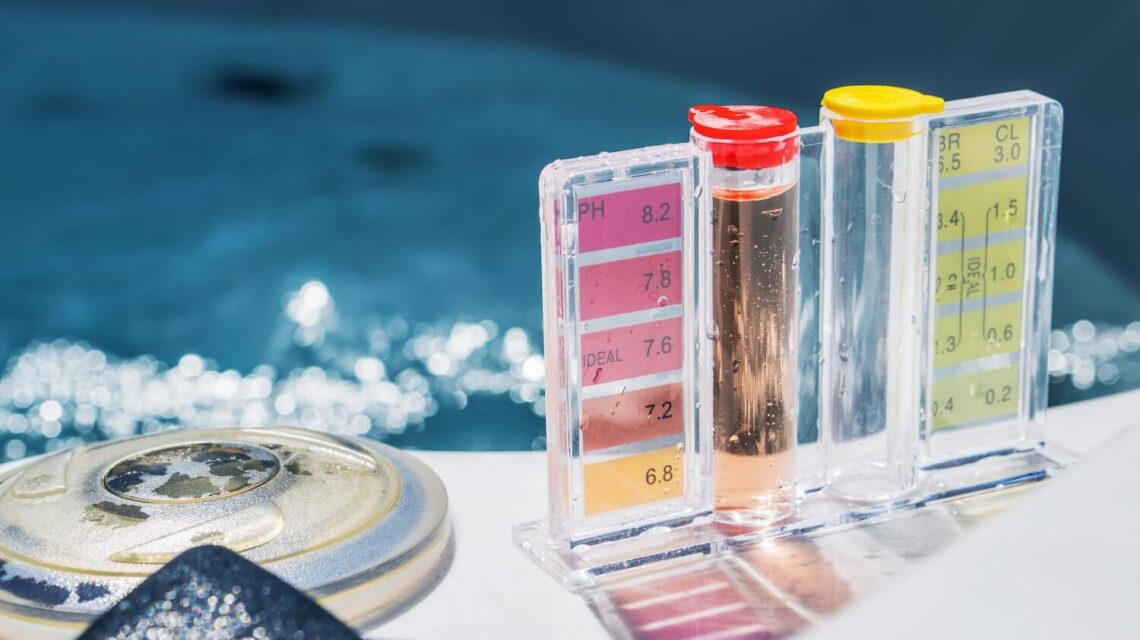
The primary challenge of a traditional chlorine pool is the frequency of testing. In a climate like Central Florida’s, where heat and UV rays are relentless, a chlorine pool should ideally be tested and adjusted two to three times per week. This ensures that sanitizer levels remain within the “goldilocks” zone, high enough to kill bacteria but low enough to remain comfortable for swimmers.
Traditional pools also require the careful handling and storage of concentrated chemicals. This is not just a chore; it is a safety consideration for homes with pets or children. Additionally, chlorine pool owners must be vigilant about cyanuric acid (stabilizer) levels. While a stabilizer helps protect chlorine from being destroyed by the sun, too much of it can “lock” the chlorine, making it ineffective regardless of how much you add. Navigating these chemical interdependencies is a task best left to those with professional training.
Why Professional Service is the Deciding Factor
Regardless of whether you choose salt or chlorine, the longevity of your pool depends on the consistency of its care. This is where Pool Services of Central Florida steps in to bridge the gap between “having a pool” and “enjoying a pool.” A professional service provider brings a level of technical expertise that goes far beyond simply checking for clear water.
In the state of Florida, pool maintenance is a specialized field. For example, any significant equipment repair or installation, including the mounting of a new salt chlorine generator or the plumbing of an automated feeder, is required by law to be performed by a licensed contractor. Pool Services of Central Florida is a fully licensed and insured state contractor, ensuring that every piece of equipment is installed to manufacturer specifications. This is critical for homeowners, as many manufacturers will only honor warranties if the equipment was handled by a licensed professional.
Professional care also means having a technician who understands the “circulatory system” of the pool. This includes vacuuming the floor, brushing the walls and tiles to prevent biofilm, and ensuring the skimmer and pump baskets are clear to maintain maximum flow. It also involves the deeper technical tasks, such as cleaning cartridge filters or backwashing sand and DE filters every two months. Whether your chlorine comes from a jug or a salt cell, these mechanical fundamentals remain the same.
The Cost Equation: Short-Term vs. Long-Term
When comparing salt and chlorine, the financial picture is a tale of two halves. A saltwater pool has a significantly higher upfront cost. The salt chlorine generator, the salt itself, and the potentially more expensive corrosion-resistant fixtures can add a 10% to 20% premium to the initial installation. Furthermore, the salt cell is a “wearable” part; it will eventually need to be replaced, usually every three to seven years, at a cost that can reach over a thousand dollars.
However, the ongoing chemical costs for a saltwater pool are much lower. Salt is inexpensive and does not need to be added frequently, whereas chlorine prices can fluctuate, and the demand for it is constant. Over several years, the savings on chemical purchases often offset the initial investment of the salt system.
Traditional chlorine pools are much cheaper to start with. There is no expensive generator to buy, and the equipment pad is simpler. But the monthly cost of tablets, liquid shock, and stabilizers adds up over time, and the “labor” of manual dosing, whether in your time or paid service, is higher.
Ultimately, the choice often comes down to personal preference for water feel and your willingness to invest upfront for long-term convenience. But in both cases, the “health” of the investment is only as good as the maintenance it receives. Choosing Pool Services of Central Florida means you are choosing a partner with over 15 years of experience in 10 different counties, dedicated to ensuring your pool, salt or chlorine, stays blue, healthy, and inviting.
FAQ: Navigating Salt and Chlorine Choices
1. Is a saltwater pool really better for people with allergies?
Generally, yes. Because saltwater systems maintain a more consistent, lower level of chlorine, there are fewer “chloramines” (the byproduct that causes the strong smell and irritation). Most swimmers find the water much gentler on their eyes, hair, and skin.
2. How do I know if my salt cell is working?
If your pool water starts to look cloudy or you notice algae growth despite your system being “on,” the cell may be failing or covered in calcium scale. A professional technician can test the cell’s output and perform an acid wash if necessary.
3. Do I still need to “shock” a saltwater pool?
Occasionally, yes. After a heavy storm or a pool party, the salt generator may not be able to keep up with the sudden influx of contaminants. In these cases, a supplemental shock treatment is necessary to reset the water.
4. Can I convert my existing chlorine pool to saltwater?
Yes, most traditional pools can be retrofitted with a salt chlorine generator. However, this should be done by a licensed professional to ensure the plumbing is correct and to evaluate if any of your existing equipment, like an old heater, is susceptible to salt corrosion.
5. Does a saltwater pool taste like the ocean?
No. The salinity of a saltwater pool is about 3,000 to 3,500 parts per million, while the ocean is around 35,000 parts per million. You may notice a very faint hint of salt if you taste the water, but it is not overwhelming.
6. Why is professional maintenance recommended even for “automated” salt pools?
Automation handles the delivery of the sanitizer, but it doesn’t brush the walls, vacuum debris, clean the filters, or monitor for equipment leaks and corrosion. Consistent expert care prevents expensive equipment failures and ensures the water is truly balanced, not just clear.
Conclusion: The Path to Pristine Water
Whether you are drawn to the silky, gentle feel of a saltwater oasis or the powerful, controlled sanitization of a traditional chlorine pool, the end goal is the same: a safe and beautiful place for your family to enjoy the Florida sunshine. Both systems offer unique benefits, and both come with specific responsibilities.
The most important factor in your pool’s success isn’t the type of salt in the water; it’s the level of expertise behind its care. By entrusting your backyard retreat to Pool Services of Central Florida, you are ensuring that every chemical balance, equipment check, and cleaning ritual is handled with the precision that only 15 years of local experience can provide. Whether you need a weekly pool cleaning service, a new equipment installation, or a complete pool renovation, professional oversight allows you to step away from the chemistry kits and back into the water. In the battle of saltwater versus chlorine, the real winner is the homeowner who chooses expert care.